
Who they are for
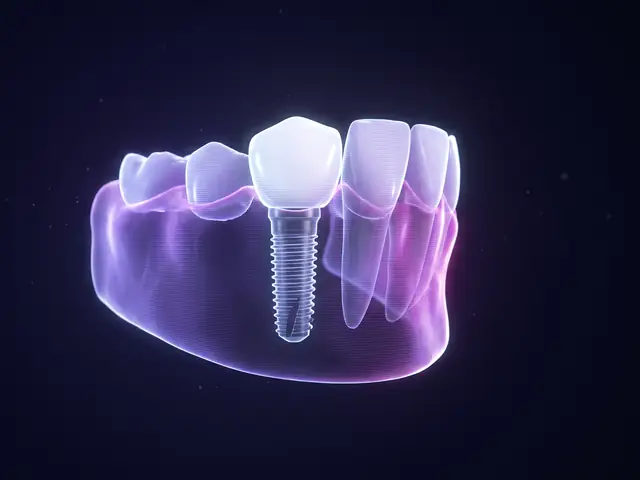
Full dentures usually come in two kinds: removable ones that rest on the gums, and ones anchored to implants. Implant-supported dentures suit people in good oral health who have enough bone density to hold implants. If your jaw has thinned, we may be able to strengthen or rebuild it first. Placement takes a longer process than a removable denture, but with proper care the result can be a long-lasting solution.
How the process works
- Consultation. We examine your mouth, review your health and check your jawbone to see whether implants are right for you.
- First surgery. A small opening in the gum exposes the bone, and the implants are placed. A temporary tooth replacement may be worn while you heal.
- Healing. Over the following months the bone fuses with the implants (osseointegration), turning them into stable artificial roots.
- Second surgery. The implants are uncovered, connectors called abutments are attached and the gum is shaped around them. The gums need about two weeks to heal.
- Final fitting. The dentures are placed over the abutments. We check the fit and comfort and make any adjustments.
Between steps, you will receive instructions on keeping the area clean. After each procedure you may be prescribed antibiotics and pain relief. Call us if you notice swelling, bruising, pain or bleeding that worries you.
Two common designs
- Bar-retained: a metal bar follows the curve of the jaw and is anchored by the implants. The denture clips onto the bar.
- Ball-retained (stud-attached): each implant has a small, usually ball-shaped attachment that fits into a socket in the denture.
In both cases, several implants support the denture, which is typically made of acrylic or porcelain. Some designs are fixed and can only be removed by a dentist, while others, often called overdentures or snap-in dentures, can be taken out for cleaning.
Benefits
- More comfortable, because they do not slide around or rub the gums like loose dentures.
- A natural look, with a smile that does not read as a denture.
- Better chewing and clearer speech, so you can enjoy more of the foods you did before.
- They interact with the jawbone much like natural teeth, instead of pressing on it.
Not sure which route is best? Compare them in our guide to replacing all of your teeth, or read about the safety of implant-supported dentures.
Common questions
Can I take these dentures out myself?
Fixed versions cannot be removed by the patient; a dentist places and removes them. Overdentures and snap-in designs are removable. We will explain which type you would receive.
Why not one implant per tooth?
Replacing a full row does not require an implant for every tooth. A few well-placed implants can support the whole denture, which is a simpler and less invasive treatment.
How many implants do I need?
Usually between two and five. Four is common for a full row, but the number depends on your case.
How long do they last?
With good care and regular checkups, they can last many years. Your dentist will tell you if a part ever needs replacing.
How well do implants work?
In skilled hands, implants have a success rate above 95 percent. Minor complications can happen, and we will review the risks with you.