
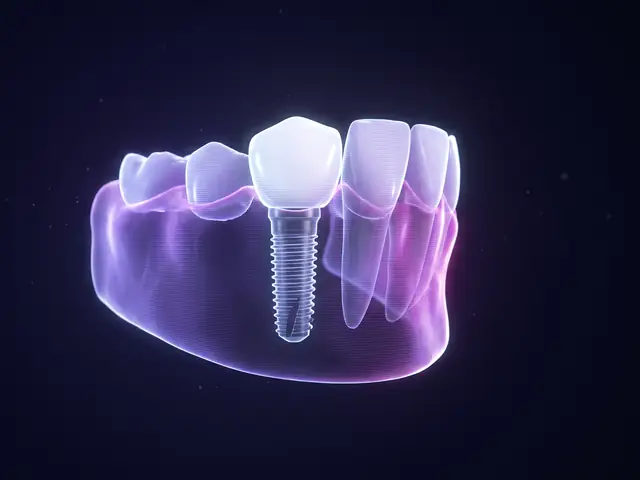
How implants work
An implant is a small titanium post, shaped a bit like a screw, that goes into the jawbone and acts as an artificial root. Over several months the bone grows around it and holds it firmly in place. This is called osseointegration, and it accounts for most of the treatment time. The implant also keeps the jawbone stimulated, which helps preserve it.
A connector called an abutment attaches to the post, and a crown, bridge or denture is fastened on top. The visible crown is color-matched to your natural teeth, so it is hard to tell which tooth is the replacement. Implants can also anchor implant-supported dentures when many teeth are missing.
The steps
- Consultation. We review your health history and medications, examine your mouth and take X-rays to check whether your jaw can support an implant.
- Preparation. If there is not enough healthy bone, you may need a bone graft first. Gum disease or cavities are treated beforehand.
- Placement. The implant post is placed in the jawbone, usually with local anesthetic. The visit generally takes an hour or less. A healing cap or temporary tooth may protect the area while it heals.
- Healing. The bone fuses with the implant over several months. Overall, the process commonly takes three to six months, and longer for more complex cases.
- Final restoration. Once the implant is stable, we attach the abutment and the permanent crown, bridge or denture. You can choose a fixed restoration, which only a dentist removes, or a removable one that snaps on for cleaning.
Recovery and care
Some soreness, swelling, bruising and minor bleeding are normal for the first few days. An ice pack helps, and your dentist may recommend pain relievers or antibiotics. Stick to soft foods and avoid chewing on the implant site. Many people return to normal activity the next day, though heavy lifting is best avoided for about 48 hours. Our guide to post-op care explains the details.
Once healed, you care for an implant like a natural tooth: brush, floss and keep up regular checkups. Avoid smoking and chewing hard objects. If a crown chips or the implant feels loose, call us promptly; a damaged crown can usually be replaced without touching the implant.
Why people choose implants
- They feel stable and comfortable, and you can eat and speak normally.
- They look natural.
- With good care they can last for many years, often a lifetime.
- Unlike a bridge, they do not rely on neighboring teeth, and a fixed implant tooth does not come out for cleaning.
Implants are not right for everyone. Certain health conditions affect bone healing, and smoking raises the risk of failure. Like any surgery, there are small risks such as infection, sinus problems or injury to nearby teeth. We will go over them at your consultation.
Common questions
How long does the process take?
The surgery itself usually takes about an hour or less. From consultation to final tooth, plan on several months, since the bone needs time to bond with the implant.
Can I get implants if I wear dentures?
Yes. Implants can hold fixed or removable dentures in place, which many people find more stable and comfortable.
Could I be allergic to the implant?
Implant posts are typically a titanium alloy. Titanium allergies are uncommon, and allergy testing is available if you are concerned.
How soon can I go back to work?
Most people feel ready to resume normal activity the next day, although some swelling and bruising are common.
What if an implant crown breaks or an implant loosens?
A damaged crown can be repaired or replaced. A loose or failed implant may need to be removed and, if bone was lost, rebuilt with a graft before a new one is placed. Contact us as soon as you notice a problem.