
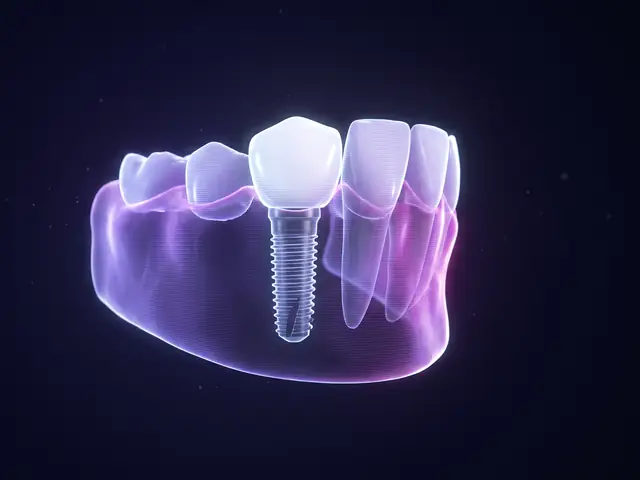
Why care still matters
A crown on an implant cannot decay the way a natural tooth can. But the gums and bone around it can become inflamed, a condition called peri-implantitis, which weakens the support and can lead to failure. Careful home care and regular professional checkups protect the whole system: the implant post, the abutment that connects it and the crown that completes your bite.
Daily care habits
Treat the crown like a natural tooth, with a few extras. Use a soft-bristled toothbrush and a low-abrasive toothpaste, which avoids scratching porcelain or zirconia. Clean under the edges of the crown and around the abutment, where plaque collects at the gumline and drives inflammation.
Before you leave the office, ask us to show you how to clean your crown. A short demonstration helps you learn floss threaders, water flossers and interdental brushes in the right size for your spaces. A routine that works:
- Brush for two minutes with gentle, circular strokes.
- Floss daily with regular floss, a floss threader or interdental brushes, as your dentist recommends.
- Add a water flosser to flush plaque from around the point where the implant meets the abutment.
- Rinse with an alcohol-free mouthwash.
- Limit frequent sipping of sugary or acidic drinks between meals.
Protecting the crown from stress
Chewing forces can chip porcelain or loosen small parts over time. If you clench or grind your teeth, we will recommend a custom night guard to spread out the pressure. Also ask about your bite, how the upper and lower teeth meet. A balanced bite lowers stress on the crown, since an implant, unlike a natural tooth, has no shock-absorbing ligaments.
- Do not use your teeth as tools: no tearing packages, chewing ice or biting nails.
- Cut hard or sticky foods into small pieces and chew slowly.
- Reduce or quit tobacco, which raises the risk of gum inflammation and bone loss.
Professional care
Schedule cleanings and exams every six months, or more often if we recommend it. A hygienist cleans hard deposits with implant-safe instruments. The dentist checks the crown and your bite, and tightens the components if needed.
Call us if you notice bleeding that continues after brushing, gum tenderness, a bad taste, a chip or crack, or a crown that feels high or loose: (781) 289-3331. Early care is usually simple, like a bite adjustment, a targeted cleaning or maintenance of a component.