
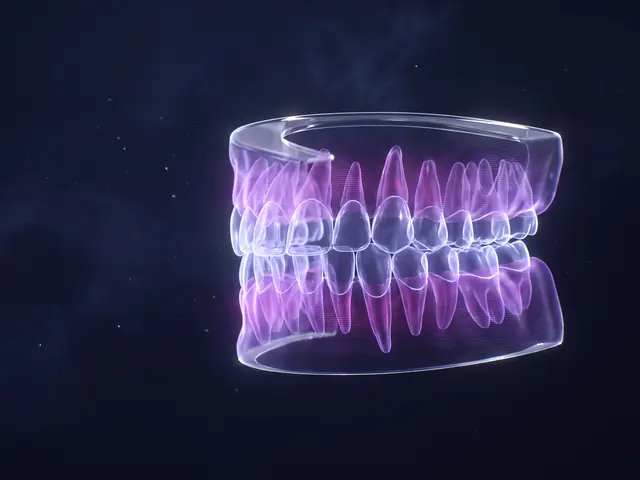
How Invisalign works
You wear a series of custom-made clear trays. Each one is shaped a little differently from the last, so your teeth move gradually and gently into place. The trays are smooth plastic trimmed to fit around your gums, and every one or two weeks you switch to the next set. Each new tray feels slightly different as it shifts your teeth.
Some patients also need attachments, which are small tooth-colored shapes bonded to the teeth to help the aligners grip and push in the right direction. We decide if you need them, and we remove them when treatment ends.
Getting started
- Consultation. We examine your smile and talk through your goals.
- Records. We take digital scans or impressions, photos and X-rays to build an accurate model of your teeth and bite.
- Treatment plan. The Invisalign laboratory builds a 3D model and a step-by-step plan. We review it, adjust it if needed and approve it with you.
- Aligners made. The lab manufactures your full series. This usually takes a few weeks, about four to six.
- Fitting. You return to our office to check how the first aligners fit and learn how to wear them.
Pros and limits
Clear aligners are almost invisible, so no one sees metal brackets or wires. Because you take them out to eat and drink, you do not have to avoid foods, and brushing and flossing are simple. The smooth plastic is also gentle on your mouth.
They are not right for everyone. Invisalign works best for mild to moderate crowding, spacing, overbites, underbites and crossbites. Severe problems may need another approach, such as traditional braces. Aligners are for teens and adults whose jaws are mostly or fully developed, not young children. They also only work if you wear them, so we look at your habits honestly. If you often skip them or tend to snack and sip all day, braces may fit better.
Wearing and caring for your aligners
- Wear them 20 to 22 hours a day, including overnight. Remove them only to eat, drink, brush and floss.
- Rinse them whenever you take them out. Clean them with a soft toothbrush and clear, unscented soap, or the Invisalign cleaning system. Skip hot water, which can warp them, and toothpaste with whitening agents, which can wear the plastic.
- Soak them for 15 to 30 minutes a day.
- Brush and floss before putting them back in, so food does not stay trapped against your teeth.
- Keep them in their case when they are out.
How long it takes
Only a dentist can predict your timeline after an exam. Severity, age and how well you follow the plan all matter. On average, treatment takes under two years, often about 12 to 18 months, and teens are a little faster. Plan on a visit about every four to six weeks so we can check your progress. When treatment ends, you will need a retainer so your teeth do not move back.
Clear braces: another discreet option
Clear braces, also called ceramic braces, work like metal braces but use clear or tooth-colored brackets and a wire we tighten over time. They suit teens and adults with all their adult teeth. They are less visible than metal but not invisible, and you cannot remove them to eat. Ceramic is less durable than metal, so brackets can break, especially in contact sports. Treatment often takes about a year and a half to three years. Ask us which option fits your mouth and lifestyle.
Common questions
Does Invisalign hurt?
It is not painful, but your teeth can feel sore when you switch to a new tray. That pressure is a sign your teeth are moving.
Will my teeth feel loose?
That can happen. Your teeth are shifting, and the gums are re-forming around them as they move.
Will Invisalign affect my speech?
You may notice a slight lisp at first. It should fade as your tongue gets used to the aligners.
What if I lose or break an aligner?
Call our office right away. Depending on where you are in treatment, we may have you go back to your previous set, move to the next one or order a replacement.
Will I need a retainer?
Yes. After treatment, a retainer keeps your teeth from drifting back, and we may recommend wearing your last aligners overnight for a time. If you stop wearing them too soon, your teeth can return to their old positions.